
Why Only Four Things
People are surprised by how much a 4-point inspection leaves out. No appliances. No cosmetic condition. No grading, no fence, no pool equipment, no attention paid to the things that dominate a normal inspection report.
That is not laziness, it is aim. An underwriter reading a 4-point is trying to answer exactly one question: what are the odds this house produces a large claim in the next few years? Chipped tile does not produce large claims. Roofs, wiring, water lines, and air handlers do. Those four systems account for the overwhelming majority of catastrophic residential loss — fire, water damage, and everything that follows both.
So the form asks about four things, in some detail, and ignores the rest.
1. Roof
The roof is first on the form and it decides more outcomes than the other three combined.
The form wants covering type, age, and condition — and then the line that carries the most weight: remaining useful life. That is an inspector's judgment of how many serviceable years are left, and it is not simply the install date restated. Two roofs installed the same week can be years apart in remaining life depending on exposure, ventilation, and how they were installed.
What pulls the number down: granule loss with the mat showing, curling and lifted tabs, soft decking, failed flashing at valleys and penetrations, prior patch repairs, and staining visible from the attic side. This is the section that most often turns a routine renewal into a conversation, and we covered it at length in what your roof's age really means to a Florida insurer.
2. Electrical
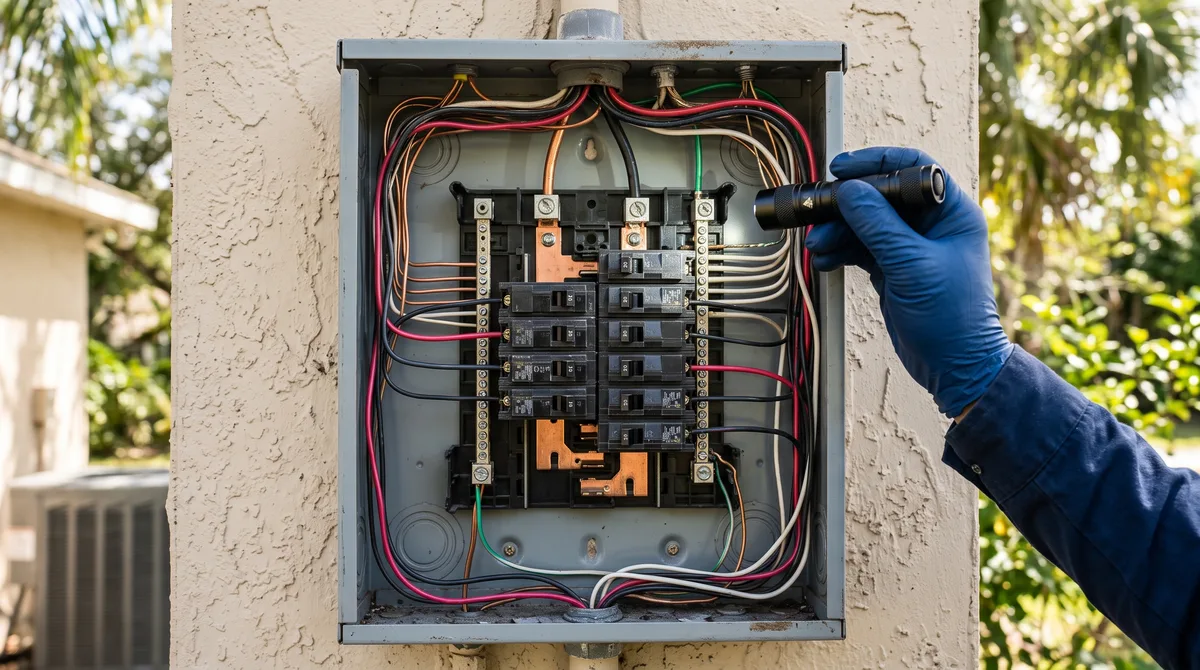
Electrical is where older Brevard County homes get themselves into trouble, and where the objections are least negotiable. Water damage is expensive. Fire is total.
The panel comes open, the dead front comes off, and we look at what is actually in there:
- Panel manufacturer — Federal Pacific and Zinsco are frequent hard stops
- Service size and whether it suits the house as it is used now
- Breaker condition, double-taps, and mismatched or oversized breakers
- Aluminum branch wiring, common in mid-1960s through 1970s construction
- Cloth-insulated or deteriorated conductors
- Knob and tube, rare here but not extinct
- Grounding and bonding, and whether the system is grounded at all
- GFCI and AFCI protection where it is expected
- Open splices, missing covers, and amateur additions
- Evidence of arcing, scorching, or heat at the bus
A Federal Pacific Stab-Lok panel is worth calling out on its own. Plenty of carriers will decline a house over that panel alone regardless of how good the rest of the report looks, and no amount of explaining that it has worked fine for forty years changes the underwriting answer.
Worth knowing before you book: we need the panel accessible. If it is behind stored boxes, blocked by a chest freezer, or locked, that section cannot be completed and the report goes to your carrier incomplete. Five minutes of clearing beforehand avoids a second visit. The same goes for the attic hatch and the water heater.
3. Plumbing
Plumbing questions divide into two: what the pipes are made of, and what condition they are in.
Material matters because some materials have a reputation that precedes the individual house. Polybutylene — grey, usually with copper or plastic crimp fittings, installed widely from the late 1970s into the mid-1990s — is the one that stops policies in Florida. Many carriers simply will not write over it. Galvanized steel supply is the other one, generally corroded from the inside by the time anyone asks, with the loss of pressure to prove it. Copper, CPVC, and PEX are unremarkable and that is exactly what you want from a plumbing section.
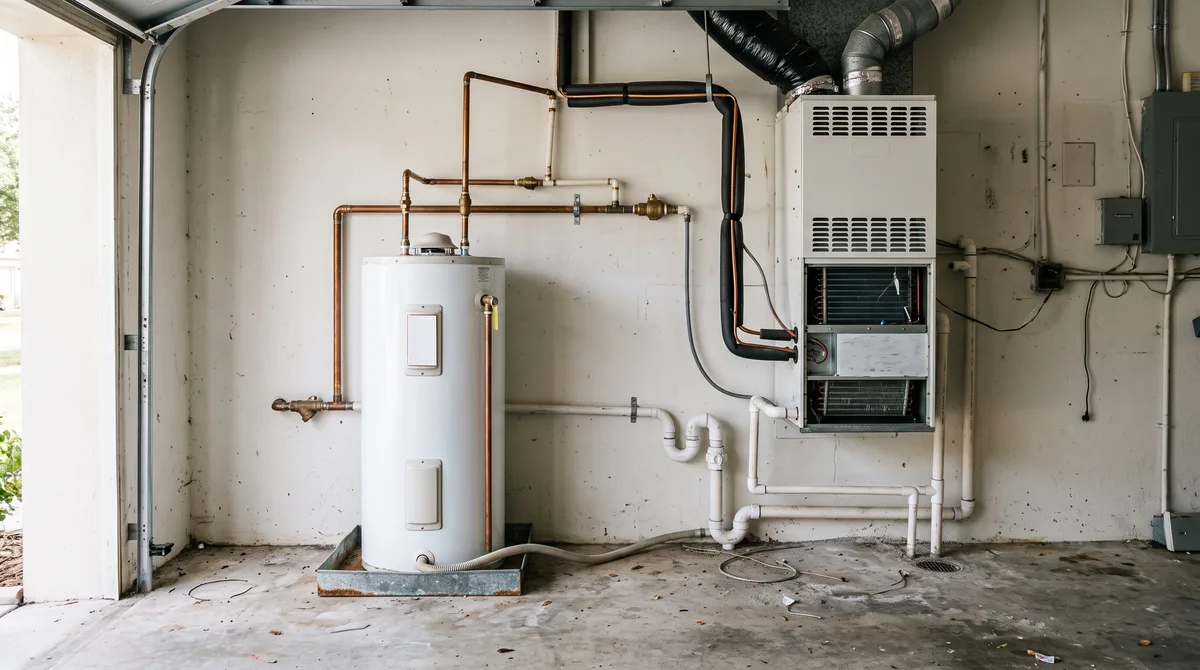
Condition covers the rest: active leaks and past repairs, corrosion at fittings, water heater age and condition, whether it has a drip pan and a functioning TPR discharge, drain and waste material, visible staining under sinks and around fixtures, and any sign that something has been wet repeatedly.
4. HVAC
The lightest of the four in most reports, but not a formality — a failed condensate line can put a ceiling on the floor.
Recorded here: system age and type, whether it produces heat and cooling when operated, visible condition of the air handler and condenser, refrigerant line insulation, the condensate drain and its secondary pan or float switch, ductwork condition where visible, and any evidence of prior water damage around the air handler.
Age is the headline. A Florida air conditioner works most of the year, and carriers know a fifteen-year-old system is living on borrowed time. It rarely stops a policy on its own, but it is one more line pushing in the wrong direction on a report that already has a tired roof at the top.
There Is No Pass or Fail
Homeowners ask constantly whether they passed. There is nothing to pass. The 4-point is a condition report, not a test — we record what is there and your carrier decides what to do with it.
That distinction is worth holding onto, because it means an inspector cannot promise you an outcome, and anyone who does is guessing. What we can do is tell you plainly what the form will say before it goes anywhere. If there is a polybutylene problem or a Federal Pacific panel in your house, you will hear it from us that day rather than from an underwriter three weeks later.
How It Fits With Everything Else
Two reports get confused constantly, so: the 4-point decides whether a carrier will insure the house. The wind mitigation inspection decides what they charge. They are different forms answering different questions, and most older Brevard homes need both — which is the whole subject of 4-point vs wind mitigation.
If you are buying rather than renewing, the 4-point does not replace a full home inspection. It is narrower by design and it is written for your insurer, not for you. Buyers generally want both, and our side-by-side comparison lays out where the coverage differs.
What It Costs
A standalone 4-point is $150. Paired with a wind mitigation in the same visit it is $250, which is the combination most people asking about an older home actually need. Full home inspections start at $299 and include a wind mitigation report free. Military and first responder discounts apply. Everything is on the rates page, and same or next-day scheduling is normal across Brevard County.
Our preparation guide covers the access issues worth handling before we arrive.
To be clear about our role: SureHome inspects and documents. We do not perform repairs, we do not sell insurance policies, and we cannot guarantee any carrier's decision or price. Accurate documentation may reduce what you pay — never will. Licensed HI 11755, CGC1530959, CCC1336594.
Frequently Asked Questions
Need a 4-Point for Your Carrier?
4-point inspections are $150 standalone, or $250 combined with a wind mitigation in the same visit. Same or next-day scheduling across Brevard County. Call 321-722-7321.