
A Very Narrow Island
Structure, roof, attic, electrical, plumbing, HVAC, the exterior envelope, drainage and every interior system, three to four hours on a typical house. That scope is the same in Melbourne Beach as it is in Palm Bay. What is not the same is how much water a property here is standing between.
Along this stretch of A1A the barrier island narrows to a few hundred yards. Atlantic on one side, the Indian River lagoon on the other, and a good number of properties with exposure to both. That geography decides most of what an inspection has to pay attention to, and it splits the housing into two kinds of building that fail in two different ways.
The finding that costs the most on this street: a room somebody enclosed underneath an elevated house. In a flood zone the space below the required elevation is generally limited to parking, storage and access, built with flood vents rather than finished walls. Enclose it into a bedroom or an office and you may have created an insurance and compliance problem, and it transfers to you at closing along with the keys. It looks like extra square footage. It frequently is not.
Ocean Side
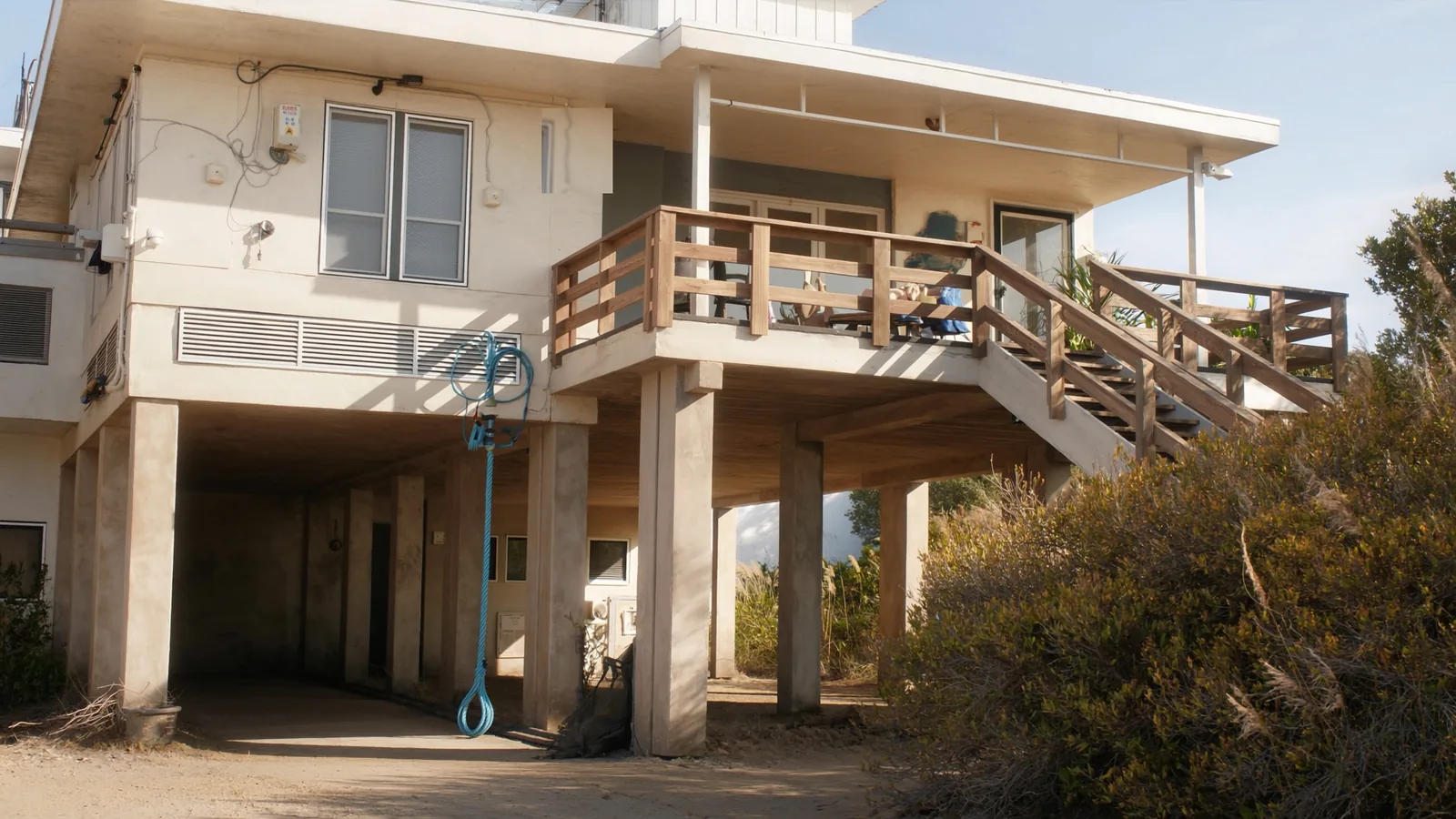
Elevated construction is the norm close to the dune, and a house on pilings needs a different walk than a house on a slab.
What Holds It Up
Piling and pile cap condition, the connections and hardware tying the structure to its supports, and corrosion at every exposed fastener, bracket and strap. Then the parts people use daily and rarely look at: exterior stair stringers and treads, deck framing, railings and their attachments. Under the house, the utility runs that are exposed to weather because there is no slab to bury them in. All of it photographed. Where a piling or a connection raises a real structural question, the report names a Florida-licensed professional engineer, because that verdict carries a seal and an inspection does not.
Wind, and the Form That Prices It
The wind mitigation report is free with a full inspection and it matters here more than almost anywhere. Roof covering and its permit date, roof deck attachment, roof-to-wall attachment, roof geometry, secondary water resistance and opening protection. On the ocean side, opening protection is the line worth attention, because shutters and impact glazing are common and their hardware corrodes. Shutters that no longer close are shutters that no longer earn a credit. If your carrier also wants the roof documented, a roof certification in Melbourne Beach can be done on the same visit.
River Side
Cross A1A and the problems change without the address changing much at all.
Docks, seawalls and boat lifts, which are not part of a standard home inspection scope. We report what is visible and reachable, cracking, cap separation, staining that suggests a tie-back problem, decking and piling condition, and the report says plainly that certifying any of it is a marine contractor's or an engineer's job. Then the ordinary lagoon-side issues: lower ground, grading that falls back toward the structure, a yard that holds water, and the persistent humidity coming off brackish water that keeps everything metal working a little harder than it should.
Salt From Two Directions
Not worse than the rest of the barrier island so much as doubled. Wind-driven Atlantic spray on one side, lagoon humidity on the other, and on an island this narrow most houses get some of each. It concentrates in condenser coils and fins, panel interiors and bus bars, shutter tracks and hardware, railing connections and exposed fasteners. Exterior metal here earns a proper look rather than a glance from the driveway.
Two Things an Inspection Cannot Tell You
Named up front, because on this island both come up and both get promised by people who should know better.
Your flood zone and your elevation. Zone comes from the flood maps, and an elevation certificate is prepared by a licensed surveyor. What the inspection contributes is how the house actually sits, the condition of the elevated structure, what is enclosed below it and what past water has already done to the building. Those two documents together are what a buyer on this street actually needs.
And whether you can build. Construction seaward of the state's coastal construction control line is regulated by the Florida Department of Environmental Protection, which is a permitting matter and nothing to do with a home inspection. If you are buying a house you intend to extend toward the ocean, find that out before you write the offer rather than after. While you are at it, ask about the sea turtle lighting rules that apply along this coast, because oceanfront exterior lighting is the small surprise most new owners here meet in their first nesting season.
Booking an Inspection
Melbourne Beach is a straight run south down A1A from our Melbourne office, and there is no travel surcharge anywhere in Brevard.
Price it, then call
The instant quote tool returns a real figure from square footage and inspection type. There is no surcharge for an elevated house or for three flights of exterior stairs. Full breakdown on the cost page.
Book the day your offer is accepted
Call or text 321-722-7321. Inspection periods run on calendar days through weekends, and on an oceanfront property you may want a surveyor and an engineer behind the report, which is two more appointments inside the same window.
Utilities on, and everything unlocked
Power, water and gas live. Clear access to the panel, the attic hatch, the water heater and the air handler. On an elevated house, unlock whatever is under it, and on a river-side lot, the gate to the dock, because both are places somebody has to let us into.
Serving Melbourne Beach and the South Beaches
We inspect throughout Melbourne Beach and 32951, along A1A through the town and south past the refuge into the unincorporated south beaches. The same rates and scheduling apply north through Indialantic and Satellite Beach, and across the causeway in Melbourne, Palm Bay and Viera. Every area is on the Brevard service areas page.