
Corrosion Goes for the Connections
The mistake people make about salt is thinking of it as a surface problem, because that is the version they can see. Rust bleeding down a railing looks bad and is usually cosmetic. The findings that matter are on the hardware doing structural work, and that hardware is almost always somewhere inconvenient.
Where It Concentrates
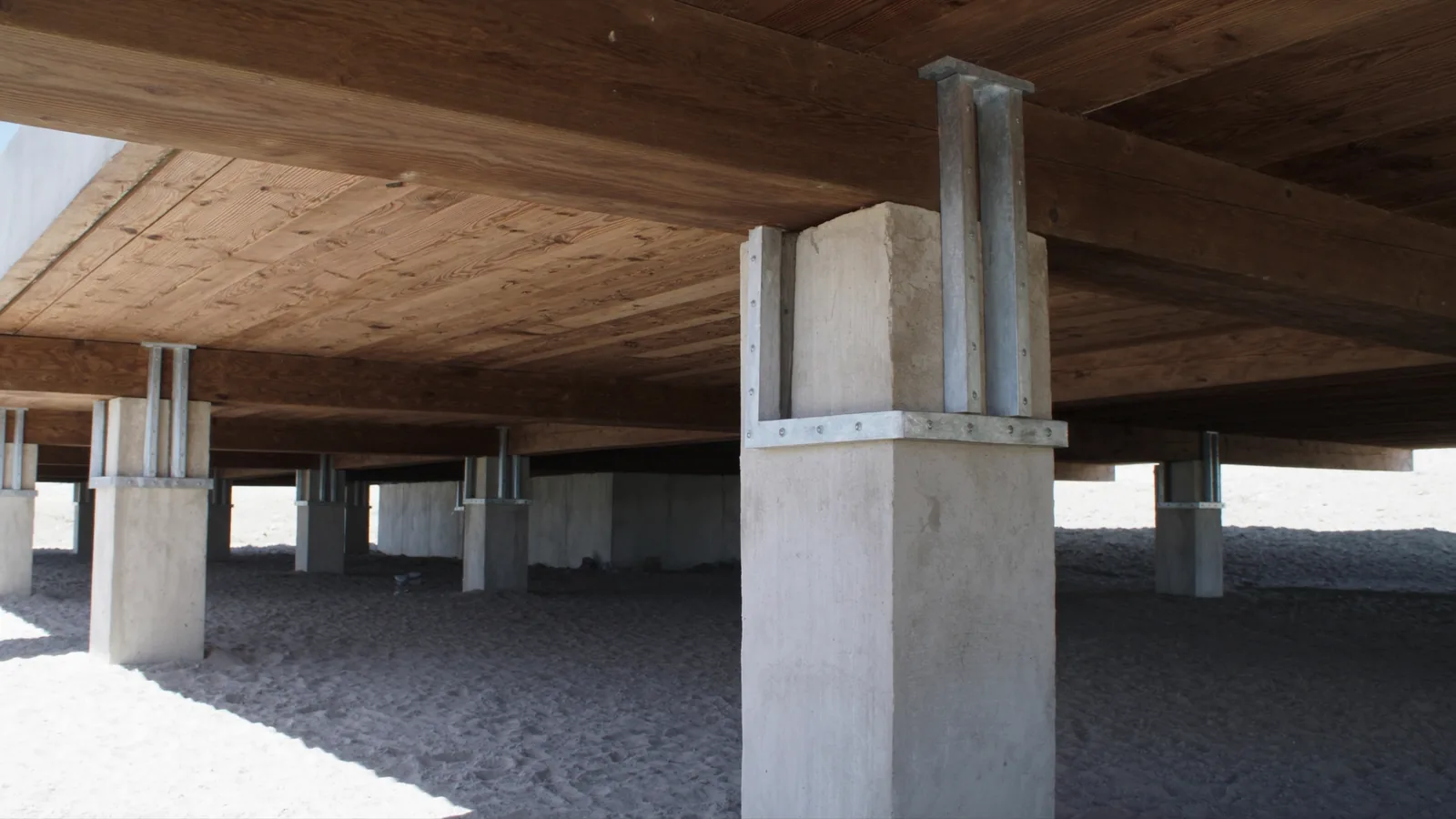
The straps, brackets and bolts tying an elevated house to its pilings, working in salt air with no maintenance ever performed on them. Hurricane shutter tracks and fasteners, which fail quietly until the season somebody actually needs them. Roof-to-wall connectors in the attic, which is the same hardware your wind mitigation credit is based on. Condenser coils and fins, panel interiors and bus bars. Exposed fasteners on decks, stairs and railings.
On this island it arrives from two directions, because the barrier is only a few hundred yards wide here. Wind-driven Atlantic spray on the ocean side, persistent humidity off the brackish lagoon on the river side, and most properties getting a share of both.
What Elevated Houses Do
Close to the dune, elevated construction is the norm, and it produces a category of finding that does not exist on the mainland.
Underneath
Piling and pile cap condition, including spalling on concrete piles and deterioration at the ground line on timber ones. The connections and hardware between the structure and its supports. Utility runs exposed to weather because there is no slab to bury them in. Every bit of that is photographed, and where a piling or a connection raises a genuine structural question, the report names a Florida-licensed professional engineer rather than guessing, because that verdict carries a seal.
The Enclosure Problem
The most consequential finding on this street, and the one that looks least like a problem. In a flood zone the area below the required elevation is generally limited to parking, storage and access, built with flood vents instead of finished walls. A previous owner who enclosed it into a bedroom, an office or a guest suite may have created an insurance and compliance issue that transfers to the next buyer at closing.
On a listing it reads as bonus square footage. In the report it reads as what is actually down there, what it is being used for, and whether it has vents or drywall.
Stairs and decks are structure, not landscaping. Exterior stair stringers, treads, deck framing, railings and their attachments carry people every day, sit in salt air permanently, and get maintained roughly never. On an elevated beach house they are among the most common safety findings we write, and they are the first thing an inspection that stays at ground level misses entirely.
Roof, Attic and Openings
The roof takes more punishment on the coast, and the attic tells you what it has been doing.
What Turns Up
Covering that has absorbed twenty years of wind-driven salt, lifted or cracked shingles, failed pipe boots, and on metal roofs the exposed fasteners and their washers corroding ahead of the panels. In the attic, staining from past intrusions, decking condition, ventilation, and the roof-to-wall connections that decide a large share of your wind mitigation credit.
Opening Protection
Worth its own paragraph because it is worth money every year. The wind mitigation form records opening protection, and shutters or impact glazing here are common. What is also common is shutter hardware corroded to the point that the shutters cannot be closed, which is both a safety problem in a storm and a credit an insurer will not apply. We operate them rather than admire them.
Moisture in a Coastal Envelope
People ask about mold. The useful question is where the water is coming from, because a humid envelope near the ocean will grow whatever it is given the moisture to grow.
The recurring causes are a bathroom fan discharging into the attic rather than through the roof, a condensate line leaking into a wall cavity, window and door seals failed on the elevation facing the weather, and a poorly ventilated enclosure beneath an elevated house. What the inspection provides is elevated readings confirmed with a moisture meter, visible suspected growth, and the condition producing it, photographed. Sampling, laboratory analysis and a written mold assessment are a separate Florida license held by a mold assessor, and the report names that as the next call rather than pretending to do it. The same division applies to wood-destroying organisms, where the WDO report a lender may require comes from a licensed pest control operator.
River Side and Ground Level
Cross A1A and the list changes again. Docks, seawalls and boat lifts, which sit outside a standard home inspection scope: we report what is visible and reachable, cracking, cap separation, staining that suggests a tie-back problem, decking and piling condition, and say plainly that certifying any of it is a marine contractor's or an engineer's job. Then lower ground, grading falling back toward the structure, and yards that hold water after a real summer downpour.
Turning Findings Into a Negotiation
The report arrives within 24 hours, photographed and grouped by consequence rather than by room, and on a coastal property that grouping is what keeps it usable.
There will always be some corrosion on a beach house. A list of thirty rusted items reads as a house falling into the sea and is not one. Pull the findings that affect safety, insurability or a major system, which here usually means pile connections, shutter hardware, stairs and anything enclosed below elevation. Get quotes on those. Ask on four items with numbers attached rather than forty without, because the first gets answered and the second gets dismissed.
Prices are on the cost page, the questions worth asking any inspector here are on the choosing an inspector page, and the main page on home inspections in Melbourne Beach covers the island itself.