
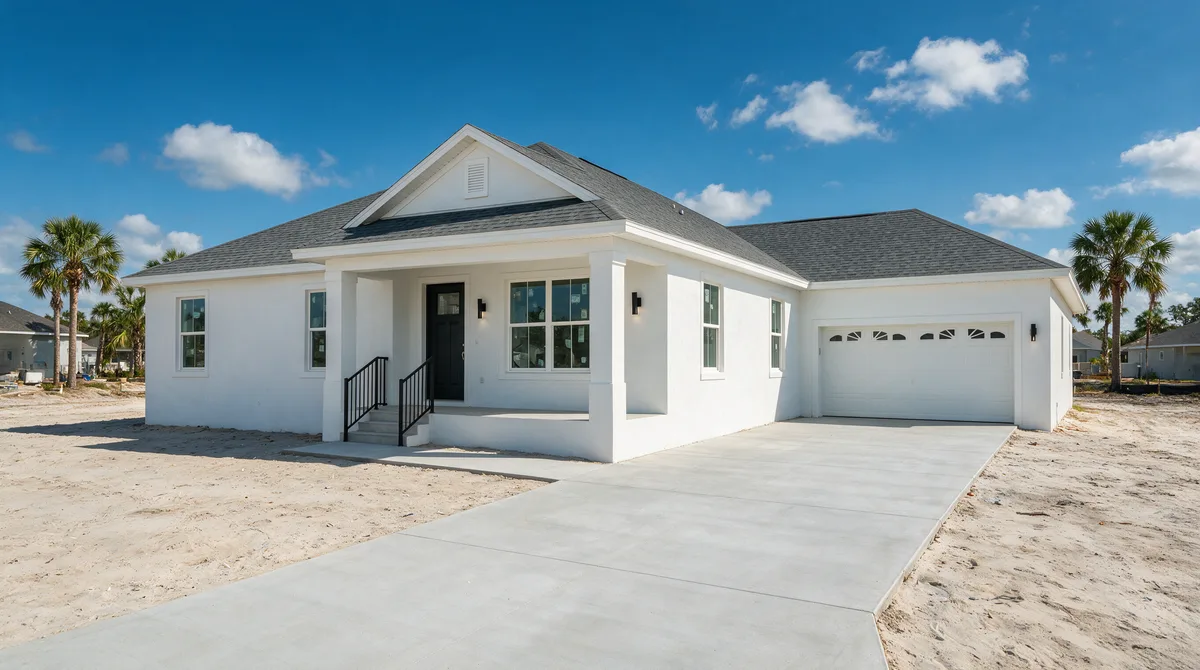
"It's Brand New. What Could Be Wrong With It?"
We hear that sentence at least once a month, usually cheerfully, usually from someone standing in a Viera or West Melbourne subdivision where the sod hasn't gone down yet. It's a fair question. It also contains a hidden assumption: that new and inspected mean the same thing.
They don't. A production home is assembled quickly by a long rotation of subcontractors, most of whom never meet each other. The framer is gone before the drywall crew arrives. The painter has no idea what the trim carpenter did or didn't finish. The county inspector who signed the certificate of occupancy was verifying code compliance on specific items on specific days. That is a genuinely important job, and a completely different job from walking the finished house looking for whether anything got missed.
Nobody's villain here. This is just what happens when forty trades touch one building over five months. Almost every new home we inspect produces a punch list. The individual items are usually minor. There are simply a lot of them, and they are far easier to get fixed before you sign than after.
Timing is the whole game. Before closing, an item on a written report is the builder's problem. After closing, the same item is a warranty claim you have to chase, on a schedule that is no longer yours. The findings are identical. The leverage is not.
What We Actually Find on New Builds
This is the honest list: the things that turn up over and over on Brevard new construction. None of it is exotic. That's rather the point.
Hairline Stucco Cracking
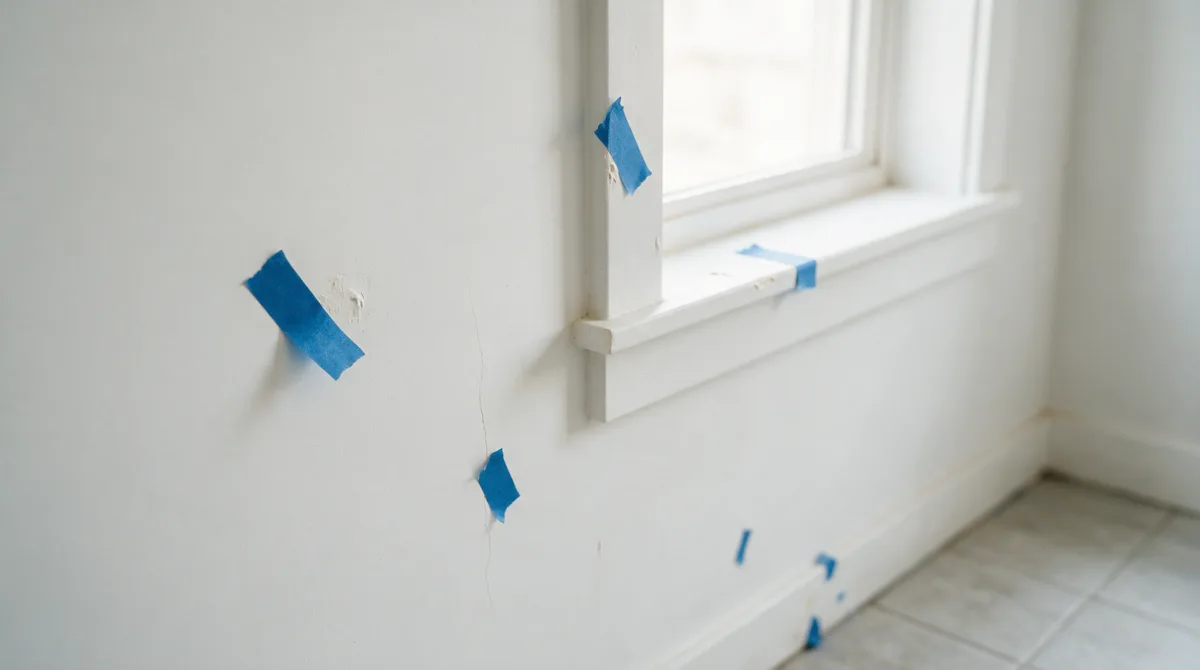
The most common finding, and the one most likely to be either over-worried or waved away. Fine hairline cracks appear as stucco cures and the structure settles, and Florida's heat cycling does not help. Most of it is cosmetic and normal.
What we care about is location, width and pattern. Diagonal cracks radiating from the corners of windows and doors, cracks wide enough to admit water, cracks that step along a line, or cracking concentrated in one section of wall. Those get documented, measured and photographed, with a plain description of what we observed. Water intrusion through a stucco wall in this climate is a genuinely expensive problem later, so we would rather flag a crack and be told it's normal than skip it.
Paint and Finish Defects
Roller lap marks, thin coverage over patched drywall, overspray on hardware and hinges, paint bridging a gap where caulk should be, spatter on tile and window glass, and the classic: a closet interior that received one coat and a promise. These are cosmetic. They are also the items builders fix most readily when they're written down, and most reliably forget when they're mentioned in passing.
Weatherstripping and Door Seals
Exterior door sweeps that don't touch the threshold, weatherstripping pinched or torn at the strike, garage-to-house doors that don't seal, and daylight visible around a closed door. In Florida this is not a comfort issue, it's an operating-cost issue and a moisture issue. You are conditioning air and paying to push it out through the gap around your own front door, while humid outside air comes back in.
Doors That Don't Close, Latch, or Stay
Interior doors that swing open or shut on their own, doors that rub the jamb, latches that don't catch, strike plates a quarter inch off, hinges with a screw missing, bifold doors off track, and pocket doors that bind. Almost always an adjustment rather than a defect. Almost always missed if nobody opens and closes every single door in the house, which is exactly what we do.
Cabinets: Trim, Hinges, and Missing Pieces
Cabinet installation is where the finish trades run out of daylight. We routinely find filler strips and scribe moulding missing at the wall, toe-kick pieces never installed, end panels absent on an exposed run, doors out of alignment with each other, soft-close hinges that don't, drawers that catch, shelf pins missing, and adjacent doors that sit a visible eighth of an inch apart. Individually trivial. Collectively, it's the difference between a kitchen that feels finished and one that doesn't.
Appliances
New in the box does not mean installed correctly, or installed at all. We find dishwashers not secured to the counter, missing or improperly looped drain lines, refrigerator water lines not connected, range anti-tip brackets not installed, dryer vents crushed behind the machine or venting into the wall cavity, microwave vent set to recirculate when it was supposed to duct outside, and appliances that simply were never run. We operate them. Occasionally something doesn't turn on, which is a much better discovery on a Tuesday than on move-in day.
The Ones People Don't Think to Look For
- Missing or disconnected bath exhaust fan ducting
- HVAC condensate line without a proper trap or termination
- Attic insulation thin or displaced near the hatch
- Grading that slopes back toward the slab
- Loose or unbonded gas and water piping
- Electrical outlets wired with reversed polarity
- GFCI protection missing at a required location
- Roof shingles lifted or nailed high on a hip
The Two Best Times to Inspect
If you can arrange two visits, do:
Pre-drywall. Once the board goes up, framing, rough plumbing, rough electrical, and mechanical rough-in disappear forever. A pre-drywall walk is the only chance to see the bones: missing hangers, notched or drilled framing beyond limits, plumbing without proper support, ducts crimped in a joist bay. Cheap to fix in that window. Genuinely painful later.
Pre-closing. The full punch list, on the finished house, before you sign. If you only do one inspection, this is the one. It's a complete full home inspection against our normal inspection standards. It's the same scope we'd apply to a forty-year-old house, because the goal is the same: report what is actually there.
There is a third moment worth a calendar reminder: eleven months after closing, just before a typical one-year builder warranty expires. A year of Florida heat, humidity and settling surfaces things the pre-closing walk could not have seen. Booking an inspection in month eleven, while the warranty is still live, is one of the highest-return appointments in homeownership.
The Builder's Walkthrough Is Not This
Your builder will offer an orientation walkthrough, and you should absolutely attend it. You will learn where the water shutoff is, how the irrigation timer works, and what the warranty process looks like. It is useful.
It is not an independent technical inspection. It is run by the builder, on the builder's schedule, by someone whose job is to hand over the house. Nobody in that room is being paid to find problems. Bring your own inspector, or at minimum bring your own inspector's report to it. A numbered list with photographs changes the tenor of that conversation considerably.
While You're At It: The Insurance Paperwork
New construction is the best-case scenario for wind mitigation. Modern Florida builds often have exactly what the state's uniform form asks about: current roof deck attachment, better roof-to-wall connections, and impact-rated or shuttered openings. Documenting that at the start means the report exists from day one rather than being scrambled for at your first renewal.
The report describes what the home has. Whether a carrier applies a credit, and how large it is, is the carrier's decision under its filed rates. Premiums may be reduced, and we are inspectors rather than agents. But there is no reason to skip a document that stays valid for five years and comes free with a full inspection. A 4-point is not typically needed on a new home, since those are aimed at older systems; our comparison of the two reports explains why.
What This Costs, and What It's Worth
A new construction inspection is priced as a full home inspection, from $299, scaling by square footage, with the wind mitigation report included free. Full numbers are on the rates page, and same or next-day scheduling is normal across Brevard County.
Set against a new-build purchase price, it is a rounding error. Set against chasing a builder for a dishwasher that was never secured and a bath fan that vents into the attic, eight months after you moved in, from the back of a warranty queue, it is one of the easier decisions in the transaction.
Frequently Asked Questions
Inspect It Before You Sign for It
New construction inspections are priced as a full home inspection - from $299, scaling by square footage, with a FREE wind mitigation report included. Pre-drywall, pre-closing, and eleven-month warranty inspections available. Same or next-day scheduling across Brevard County.