
Why This County Has So Many of Them
Brevard grew in bursts, and you can read the bursts off the housing stock.
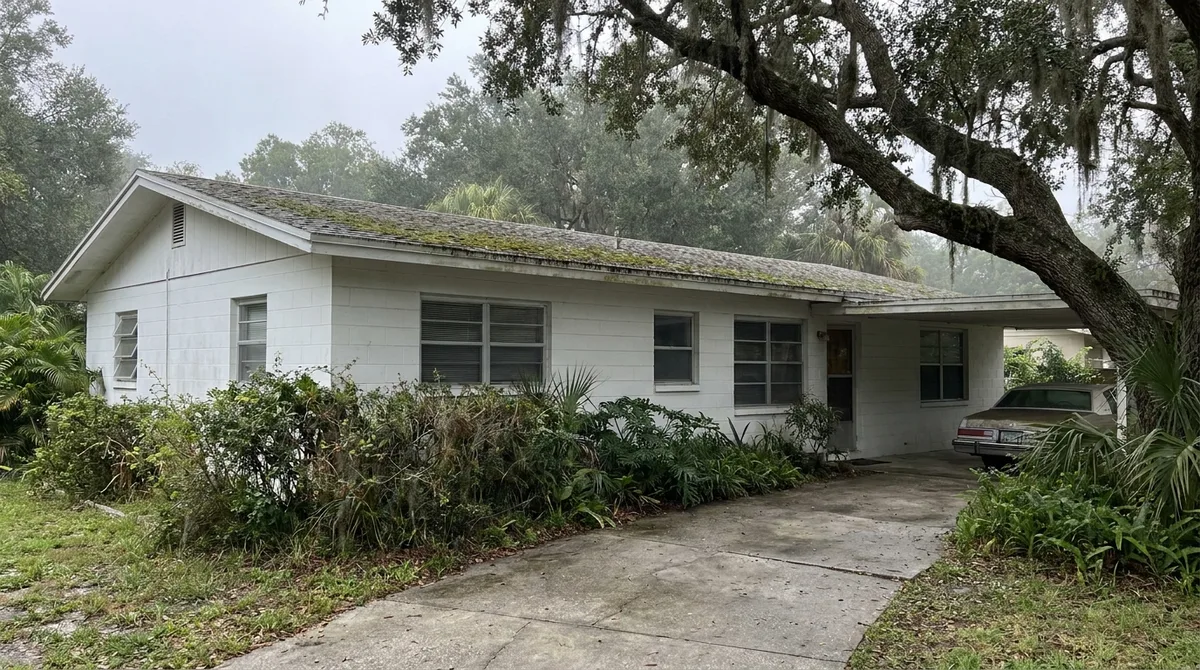
Titusville filled in fast during the Apollo years, when the space program pulled thousands of families to the north end of the county in a very short window. Palm Bay came out of the old Port Malabar development, platted on a scale that still shapes how the city works, and a lot of those lots got built through the 1960s and 70s. Melbourne, Cocoa, and Rockledge have their own layers. Viera is the newcomer by comparison.
The practical result: an enormous number of concrete block houses built between roughly 1960 and 1985, most of them structurally sound, most of them still on some original systems, and nearly all of them now old enough that carriers want a 4-point inspection before they will write a policy.
Buyers hear "older home" and think foundation problems. In this county, that is usually the least of it. Block on a slab holds up well. What ages badly is everything running through it.
The Plumbing Question
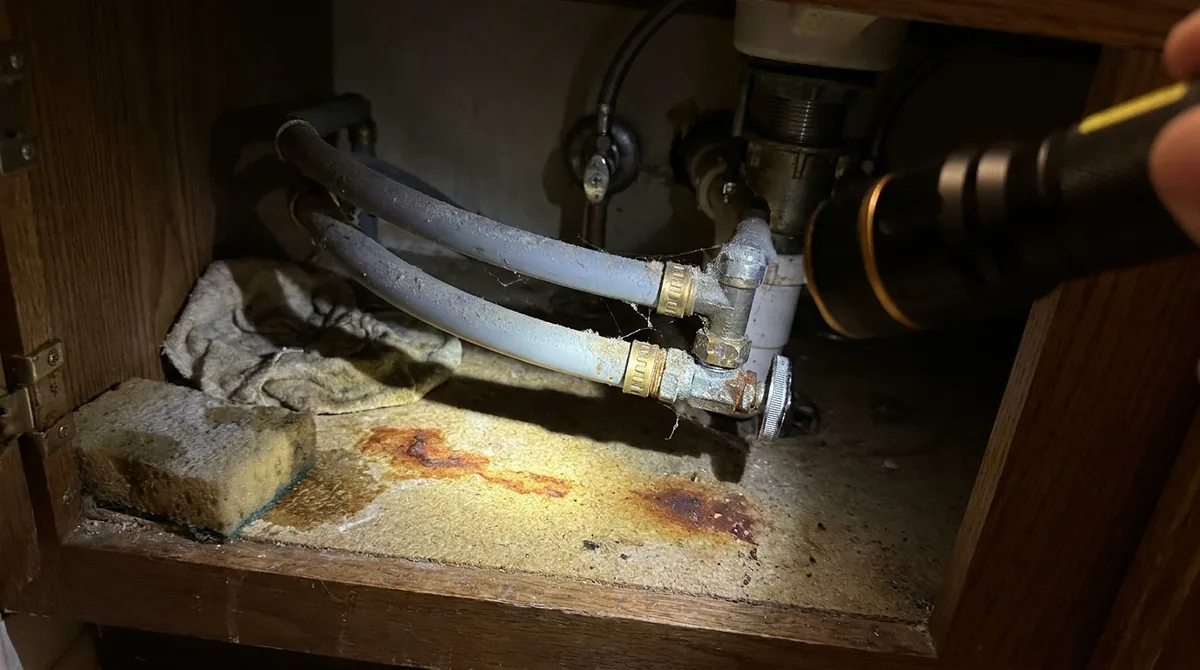
First thing we do under a bathroom sink in a house from this era is look at what color the supply lines are.
Grey flexible plastic means polybutylene. It went into a great deal of Florida construction from the late 1970s into the mid 1990s, and it developed a reputation for failing at the fittings, sometimes without any warning at all. Plenty of carriers simply will not write a policy while it is still in the walls.
Galvanized steel supply lines are the other one worth knowing about. They corrode from the inside, so pressure drops long before anything leaks visibly. And on the drain side, pre-1975 houses frequently still have cast iron waste lines, which rot from the inside over decades. The section you can see in the garage may look fine while the run under the slab is most of the way gone. On a house of that vintage a sewer scope, which we do for $265, is often the cheapest insurance in the whole transaction.
The Panel
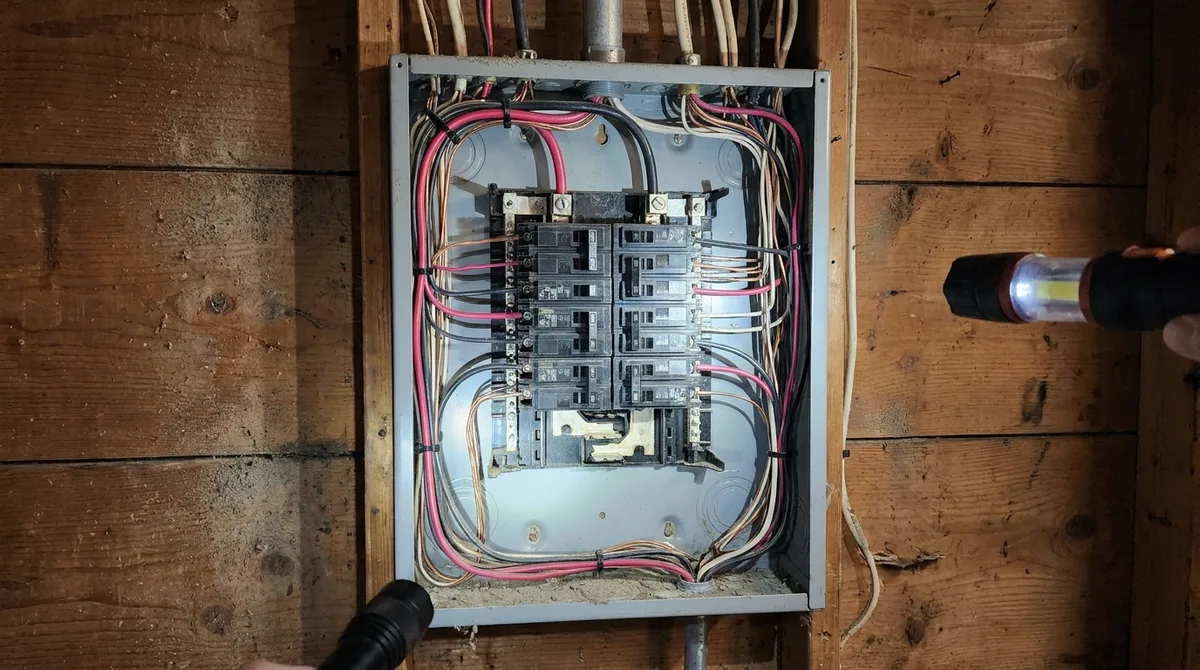
Second thing: open the electrical panel and read the label.
Federal Pacific Stab-Lok. Zinsco. Challenger. Certain Sylvania panels. These come up again and again in mid-century Florida housing, carriers treat them as elevated risk, and finding one usually means a replacement conversation before anybody binds a policy. Fuses instead of breakers land in the same category.
Then there is aluminum branch wiring, common in construction from roughly the mid 1960s through the mid 1970s. Single-strand aluminum on branch circuits is the version that concerns underwriters. It is not automatically a dealbreaker, but it has to be identified accurately, disclosed, and if it has been remediated, that work needs documentation. Guessing helps nobody.
Service capacity is the quieter issue. A 100-amp service was generous in 1968. Add central air, a modern kitchen, a pool pump, and an EV charger and it stops being generous.
Up Top
Roof age drives more insurance outcomes in Brevard than anything else, which is why we wrote about it separately. On an older home there are two additional things we're checking.
The first is how many layers are up there. A second layer over an original roof was normal practice for a long time and is a different proposition today, both for weight and for what it hides.
The second is in the attic: how the roof structure connects to the walls. In a lot of pre-1980s Brevard construction the trusses are simply toe-nailed to the top plate, with no metal connector at all. That matters for wind performance and it is also a directly credit-bearing line on the wind mitigation form. Worth knowing before you own it, not after.
Windows, Doors, and the Rest
Original aluminum single-hung windows and jalousies are still out there in quantity, particularly on the beachside and in older Melbourne and Cocoa neighborhoods. They leak air, they leak water in wind-driven rain, and they carry no opening protection credit. Replacing them is expensive; knowing they need replacing before you negotiate is not.
Other things we routinely flag on houses of this age:
- Air handlers well past reasonable service life
- Water heaters beyond ten or twelve years
- Rusted steel lintels above windows and doors
- Stucco cracking at block joints
- Grading that pitches water back toward the slab
- Additions and enclosures done without permits
- Original single-pane glass on the wind-facing side
- Attic insulation at half of current standard
That last category, unpermitted work, deserves emphasis. Carports enclosed into rooms, Florida rooms added under the original overhang, garages converted to bedrooms. Some of it was done well. Some of it was done by a neighbor on a weekend in 1991 and never inspected by anyone. Our inspectors hold a Florida General Contractor license (CGC1530959) alongside the home inspector license, which is genuinely useful when the question is not "is this damaged" but "was this ever built correctly."
What we'd tell a buyer: get the full inspection, not just the 4-point. The 4-point exists to answer an insurance carrier's four questions. It says nothing about the structure, the windows, the drainage, the attic, or the additions, which is where the actual negotiating leverage in an older Brevard home usually lives.
What This Costs
A full home inspection starts at $299 and scales with square footage. It currently includes the wind mitigation report at no charge, which is a $125 value and directly relevant on an older house. Adding the 4-point to a full inspection is $75. Booked as a pair on their own, the 4-point and wind mitigation are $250. Sewer scope is $265 if the house is old enough to warrant it, and we'd usually say a pre-1975 house is. Everything is on the rates page.
We serve all of Brevard, from Titusville through Cocoa, Merritt Island, Rockledge, Viera, Melbourne, and Palm Bay, with same or next-day scheduling and reports back inside 24 hours. If you are under contract on something built before 1985 and want a straight opinion on what you are walking into, call 321-722-7321.
Frequently Asked Questions
Under Contract on an Older Home?
Full home inspections from $299, including a free wind mitigation report. Add the 4-point for $75. Same or next-day scheduling across Brevard County.