
The Five Questions
Licensing is the floor and the licensing page covers it. These five are what separates two licensed inspectors producing very different reports on the same house.
- Do you remove the panel dead front?
- Do you enter the attic or view it from the hatch?
- Do you walk the roof, and what do you do when you cannot?
- Do you carry thermal imaging, and do you confirm it with a moisture meter?
- How does your report record areas you could not access?
Number five is the one nobody asks. A report that omits the attic reads exactly like a report on a sound attic. Without a record of what was inaccessible you cannot tell checked from skipped, and the inaccessible parts are where the expensive findings live.
Our Answers
The dead front comes off on every inspection. The attic gets entered wherever it can be safely reached. The roof gets walked where the pitch and covering allow, and the report states the method used on each slope rather than leaving you to assume. Thermal imaging is carried on every job and nothing is called a moisture problem on a thermal image alone. Anything inaccessible is recorded as not accessed, with the reason.
Why Time on Site Is the Real Variable
A thorough inspection of a typical 2,000 square foot Merritt Island home takes three to four hours. A ninety-minute inspection of the same house is not a faster inspector, it is a shorter list of things looked at.
Where the Missing Time Goes
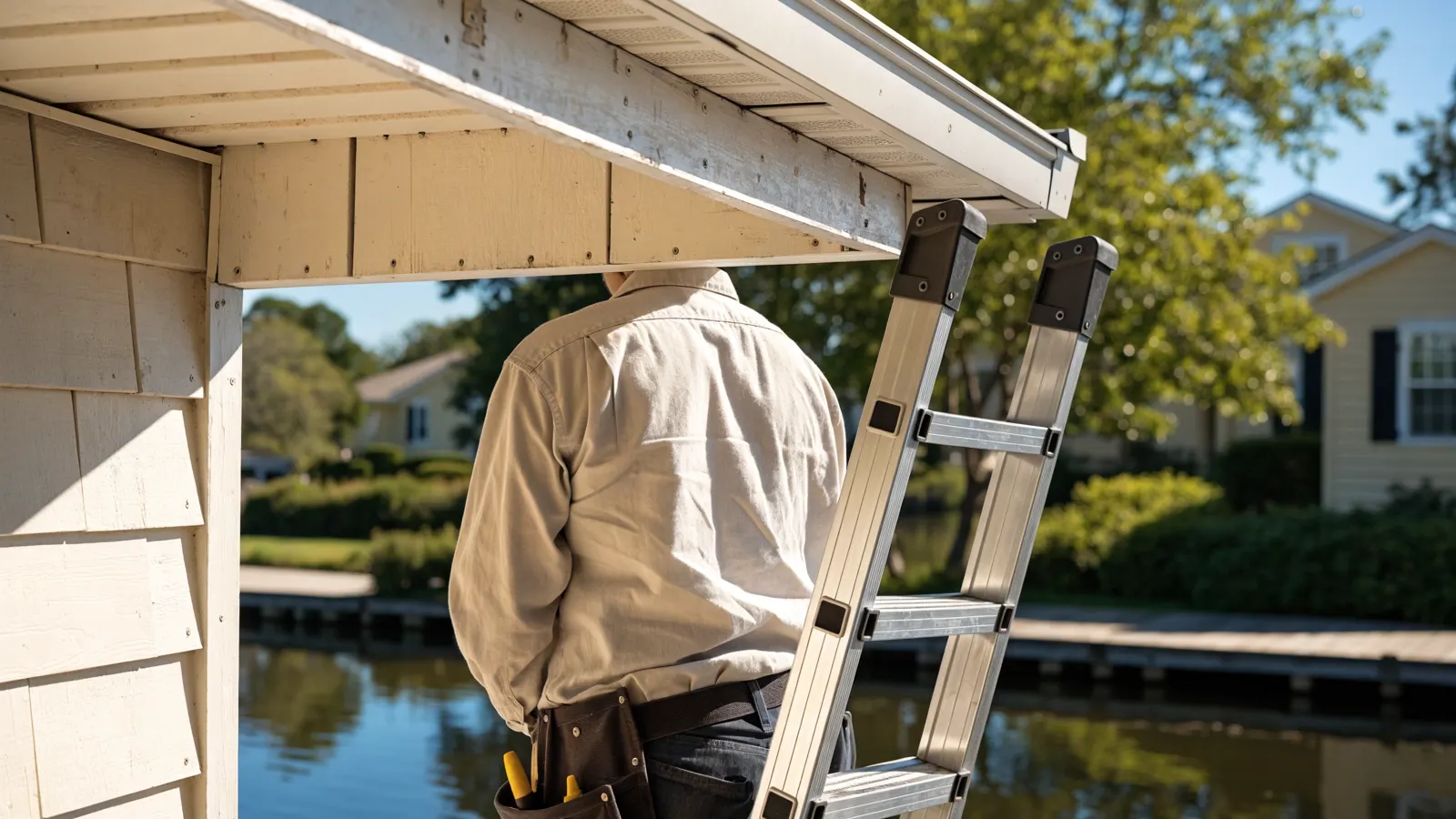
Removing and refitting a panel cover takes fifteen minutes and it is where obsolete panels, corroded bus bars and double-tapped breakers are found. Entering an attic in August takes twenty and it is where roof leaks, failed decking and absent insulation are found. Walking a roof takes twenty-five and it is where fastener corrosion and flashing failure are found. Skip all three and you have saved an hour, and you have removed the three richest sources of significant findings.
Local Experience Is Not a Slogan Here
Merritt Island has more waterfront residential property than anywhere else in Brevard, and that changes what a competent inspection looks at.
What an Island Inspector Knows to Check
The seawall cap and face for cracking and separation. Staining that suggests tie-back or weep problems. Scour at the toe. Dock decking, pilings and hardware. Boat lift framing. And how a flat lot close to the water table actually drains, because grading that falls toward the slab behaves differently on low ground.
An inspector working a generic checklist will produce a competent report on the house and say nothing whatsoever about the most expensive structure on the property.
And What They Know Not to Claim
That a seawall is sound. A home inspector license does not qualify anyone to certify one. The right answer is a photograph, a description of what is visible, and a recommendation to get a marine contractor or engineer out. Anybody who gives you a clean verdict on a seawall is exceeding their credential.
What We Do Not Do
We do not pay agents for referrals and we do not accept them. We do not perform repairs on properties we inspect, so no finding in our report is a quote for our own work. We do not offer incentives for reviews. Those three are the difference between a report you can rely on and a sales document.
Read how to judge reviews on the reviews page, see the scope on the checklist, or get a figure from the rates page. Back to the main page for home inspection in Merritt Island.