

The Window Nobody Plans For
Everyone plans for the listing. Everyone plans for the offer. Almost nobody plans for the ten days after the buyer's inspector leaves.
That window (the inspection period written into your contract) is the point of maximum leverage in the entire transaction, and it belongs to the buyer. Under many Florida contract forms a buyer can cancel during it and recover their deposit, in some cases without having to explain themselves. Nothing else in the deal gives one party that much room. Every seller who has been through it remembers the feeling.
The exact length varies. Florida residential contracts commonly run something in the range of ten to fifteen days, but it is negotiated rather than fixed, and different contract forms handle the follow-up differently. Read yours, and have your broker or real estate attorney walk you through the actual dates. We are inspectors. We can tell you what's in a report, not what your contract obliges you to do about it.
The thing to internalize: a home inspection report is a condition report, not a repair order. Nothing in it is automatically your obligation. What you owe is set by your contract and by Florida disclosure law, not by how many pages the report ran to.
What the Repair Request Actually Looks Like
The buyer's agent will typically send some form of written request (often called a repair addendum or an inspection response) naming specific items and asking for one of a small number of outcomes:
- Repair the item before closing
- A credit at closing instead of a repair
- A price reduction
- Money held in escrow pending repair
- Nothing, but disclose and document
- Cancellation, if it's bad enough
You are not obliged to accept the request as written. You can agree to all of it, some of it, or none of it, and the buyer can then accept, counter, or walk. It's a negotiation like any other, with one difference: it is happening under a deadline, with a document full of photographs in the other party's hand, and you have far less information about the house than they do. That last part is the part you can fix, but only in advance.
The Items That Are Genuinely Non-Negotiable
Most of a repair request is negotiable. A few categories really aren't, and it saves a lot of arguing to know which is which. These are the ones where a credit does not solve the problem, because a third party, not the buyer, is the one refusing.
1. Anything the Lender Won't Fund Around
If the buyer is financing, their lender has opinions. Active roof leaks, missing handrails on stairs, exposed wiring, inoperable heat, and structural concerns can all stop an appraisal from clearing. A credit doesn't help here: the lender wants the condition fixed, not compensated.
2. Anything That Blocks an Insurance Policy
This is the Florida-specific one, and it is the item out-of-state sellers underestimate most often. A buyer who cannot obtain a policy cannot close, no matter how willing everyone else is. Carriers care intensely about roof condition and remaining useful life, electrical panels with known hazards, polybutylene supply piping, and water heaters past their service life. Those are the same four systems a 4-point inspection looks at. If your roof is older, our post on how carriers read roof age in Florida is worth ten minutes before you get into this negotiation.
3. Genuine Safety Hazards
Gas leaks, an unbonded pool, a double-tapped breaker, missing GFCI protection at wet locations, a garage door that won't reverse. These are cheap to fix and impossible to defend leaving in place, particularly once they are documented in writing and you have read them.
4. Anything You Now Know About
Florida sellers must disclose known material defects that affect value and are not readily observable. Once a report puts something in front of you, you know about it. Declining to repair an item is a legitimate negotiating position; pretending you never saw it is a different thing entirely, and if this deal falls through you'll be disclosing it to the next buyer anyway. Ask your real estate attorney or broker about your specific situation.
Credit or Repair: The Math Sellers Miss
For everything outside those four categories, you generally have a choice, and sellers reliably choose wrong in the same direction: they agree to do the work.
It feels cooperative. It's often the more expensive path. Repairing under contract means finding a licensed contractor who can come this week, in a county where good contractors are booked out, and paying whatever that urgency costs. It means the work has to pass a re-inspection. And it means that if the contractor finds something worse once the wall is open, you are now negotiating a second time, with less calendar left.
A credit at closing transfers the item and the hassle to the buyer at a known number. It doesn't work for lender or insurance blockers (those must actually be fixed), but for a dated water heater, a tired fence, or a list of small deferred-maintenance items, one agreed figure is usually cleaner for everyone than three contractors and a deadline. Your agent will have a view on which applies to your deal.
Re-Inspection, and Who Pays
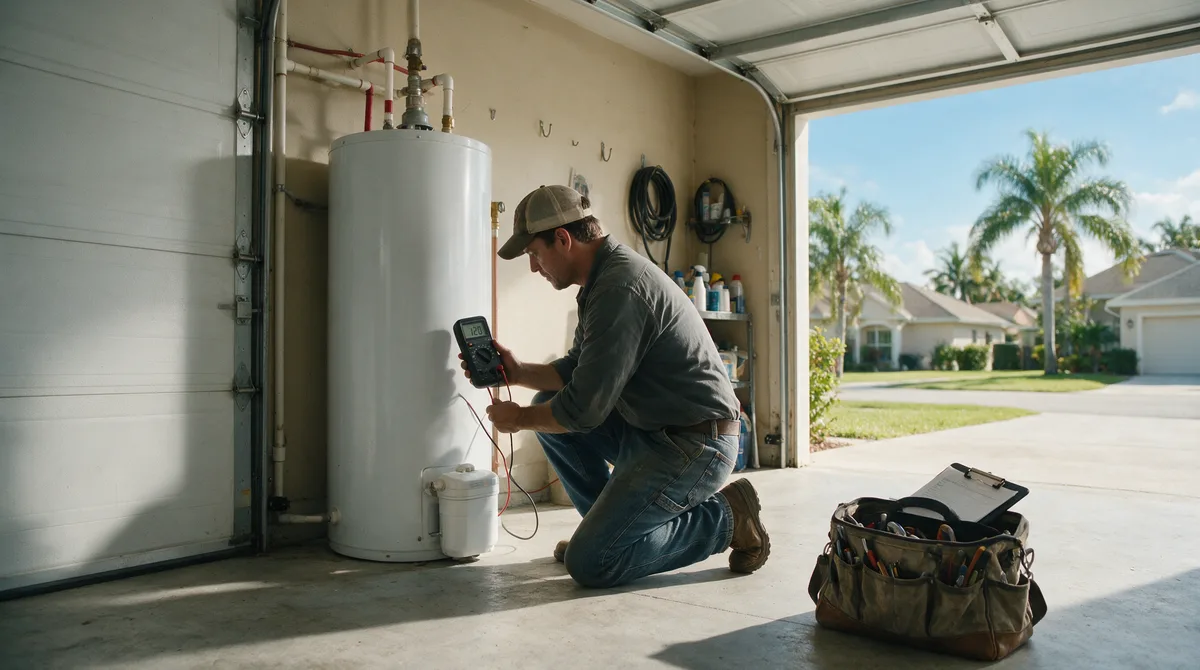
If you agree to repairs, expect the buyer to verify them. A re-inspection is a return visit to confirm the agreed work was actually done. Who pays is a contract question and varies by deal. Frequently it is the buyer, since it is usually the buyer asking.
What makes a re-inspection painless is documentation. A paid invoice from a licensed contractor, naming the work, with before and after photographs, answers most questions before they're asked. What makes a re-inspection painful is a seller saying "my brother-in-law took care of it" with nothing in writing. Keep every receipt. Photograph everything. This is the cheapest insurance in the transaction.
The Sellers Who Sail Through This Inspected in March
Here is the pattern we watch play out over and over in Brevard.
Two houses on the same street, comparable age, comparable condition. Both go under contract. Both buyers order inspections. Both reports come back with roughly the same findings, because the houses are roughly the same.
In the first house, the report is news. The sellers read it in a hurry, learn for the first time that their water heater is sixteen years old and the roof has questions, and start calling contractors at nine at night. Whatever they agree to, they agree to under time pressure with incomplete information. The buyer sets the agenda, because the buyer's inspector wrote the only document in the room.
In the second house, the sellers had the same inspection done before they listed. They fixed two things in March at ordinary rates, priced the roof into the asking figure, and disclosed the rest up front. When the buyer's report arrives, nothing in it is a surprise. The conversation is about a couple of small items rather than a renegotiation, because everything material was settled before an offer was ever written.
Same house. Same findings. Entirely different week. That is the whole argument for a pre-sale inspection, and we made the longer version of it in why smart sellers inspect before they list. This post is what the other version of that story looks like.
If You Haven't Listed Yet
Then you still have the easy version available. A pre-sale inspection is the same full home inspection a buyer would order (same scope, same report), run three or four weeks before photos are taken. That is enough time to get contractors out, complete anything worth completing, and have receipts in hand.
It starts at $299, scales by square footage, and includes a free wind mitigation report, which is useful to hand a buyer, since it documents construction features their carrier will ask about. Full pricing is on the rates page, and same or next-day scheduling is normal across Brevard County.
It will not stop the buyer from ordering their own inspection. Nothing does, and it shouldn't. It's their money. What it does is guarantee that when their report lands, you have already read it.
Frequently Asked Questions
Read the Report Before Your Buyer Does
A pre-sale inspection is the same full home inspection a buyer would order - from $299, scaling by square footage, with a FREE wind mitigation report included. Three to four weeks before you list is the comfortable window. Same or next-day scheduling across Brevard County.