
The Short List
Five things decide whether an inspection produces a full report or one with holes in it, and all five are settled before anyone arrives.
- Power, water and gas on and live
- Electrical panel reachable and openable
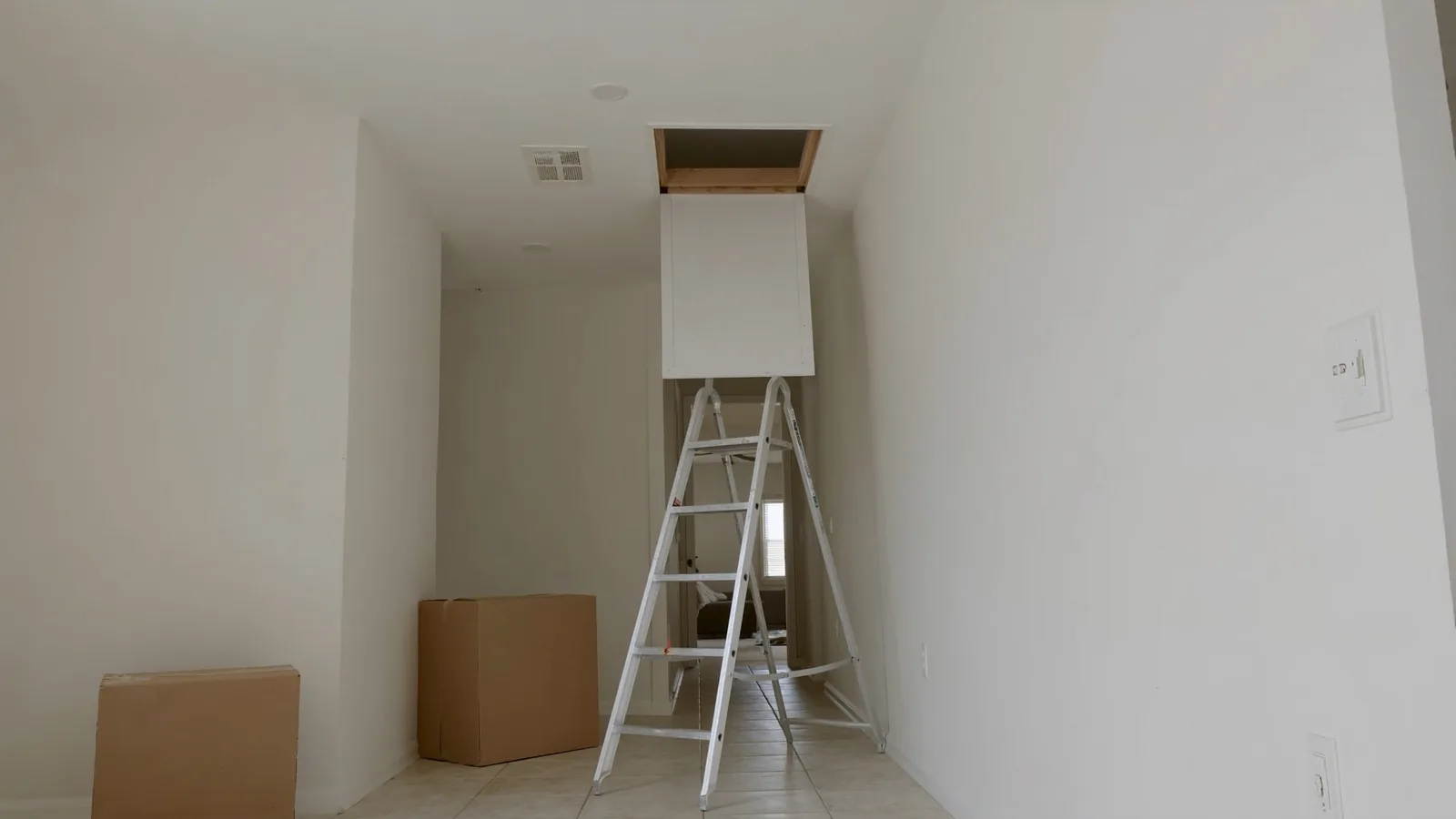
- Attic hatch clear, with nothing built under it
- Water heater and air handler accessible
- All four exterior walls walkable
The utilities one is not a formality. At a vacant listing where the seller shut the power off in March, an inspector cannot run the air handler, test a single GFCI, check a water heater or run a fixture. Every one of those returns as not evaluated, and a report full of not evaluated is a report you paid full price for and can use for nothing. If the house is empty, confirm the utilities are on before the appointment, not on the morning of it.
Clearing Access
The findings that change a price or an insurance quote are almost never in the middle of the living room. They are in the four places people store things in front of.
The Attic Hatch
In most West Melbourne floor plans it is in a hallway ceiling or a garage, and in a fair number of them somebody has built shelving directly underneath. On a new build it is usually buried under whatever went into the garage on moving day. The attic is where a disconnected duct run, a bath fan venting into insulation and the roof-to-wall connection for your wind mitigation credit all live. Half an hour of moving boxes buys you the most valuable half hour of the day.
The Panel, the Water Heater and the Air Handler
Three feet of clear working space at the electrical panel, because the dead front has to come off. The water heater reachable enough to read its data plate and check the relief valve discharge. The air handler openable, which in most houses here means a garage or a hallway closet with a door that has to swing. On the exterior, unlock the gates and move anything stacked against the walls, because the grading in the first ten feet from the slab is a real finding on a flat lot.
Paperwork Worth Digging Out
An inspection estimates ages from data plates and condition. Documents turn those estimates into facts, and facts are what an insurer and a negotiation both run on.
The roof permit or the replacement invoice, which is the single most useful piece of paper in a Florida file because the roof covering date drives both insurability and your wind mitigation credit. HVAC and water heater installation paperwork. Any repair receipts, particularly for plumbing and electrical work. A prior wind mitigation report or 4-point if one exists. And on the older stock off Minton Road, anything documenting a repipe or a drain line replacement, because that one fact can move the value of the house by five figures.
If You Are Under Builder Warranty
Two extra items, and they matter more than everything above. Your closing date, so you can count to month eleven, because most builder warranties close the workmanship coverage at twelve. And the warranty document itself, so the report can be written against what your builder actually covers rather than a general assumption about what builders usually cover. The benefits page covers why that timing is worth so much.
If You Are the Seller
There is a version of preparing that helps and a version that hurts, and the line between them is clear.
Worth Doing
Replace burned-out bulbs, because an inspector cannot tell a dead bulb from a dead circuit without testing, and a page of them makes a house read as neglected. Put outlet and switch covers back on. Fix the running toilet and the dripping tap. Change the air filters. Patch torn screens. Trim vegetation back off the walls and the roof edge. Clear the garage enough that the panel and the hatch are reachable. All of it is an afternoon and none of it is a repair anyone will question.
Not Worth Doing
Starting a repair you cannot finish before the appointment. A half-completed job is a worse finding than the original problem, because the report has to note that the work is incomplete and nobody can see what is behind the new drywall. Painting over a stain is worse still, since a moisture meter reads through paint and now the report records both the moisture and the fresh paint on top of it. And do not turn the air conditioning off overnight to save a few dollars, because a system that has not run cannot be tested properly.
On the Day
Three to four hours for a typical 1,800 to 2,500 sq ft home. Secure the pets, ideally out of the house entirely. Keep the crowd small, because a house holding two agents, three family members and a contractor is a house where the inspection slows down and attention goes to conversation instead of the work.
Come for the last hour. The first two are methodical and largely silent, and watching them tells you less than you would expect. The walkthrough at the end is the part worth being present for, standing in front of the findings, asking what a term means and getting a straight answer about which items matter and which do not. The report follows within 24 hours, usually the same evening, photographed and grouped by consequence.
Booking
Full inspections from $299, published schedule on the cost page, no travel fee in 32904. What tends to turn up here is on the common issues page, and the instant quote tool returns your exact figure without a phone call. If you are still choosing a West Melbourne home inspector, the main page explains what we check and why.