
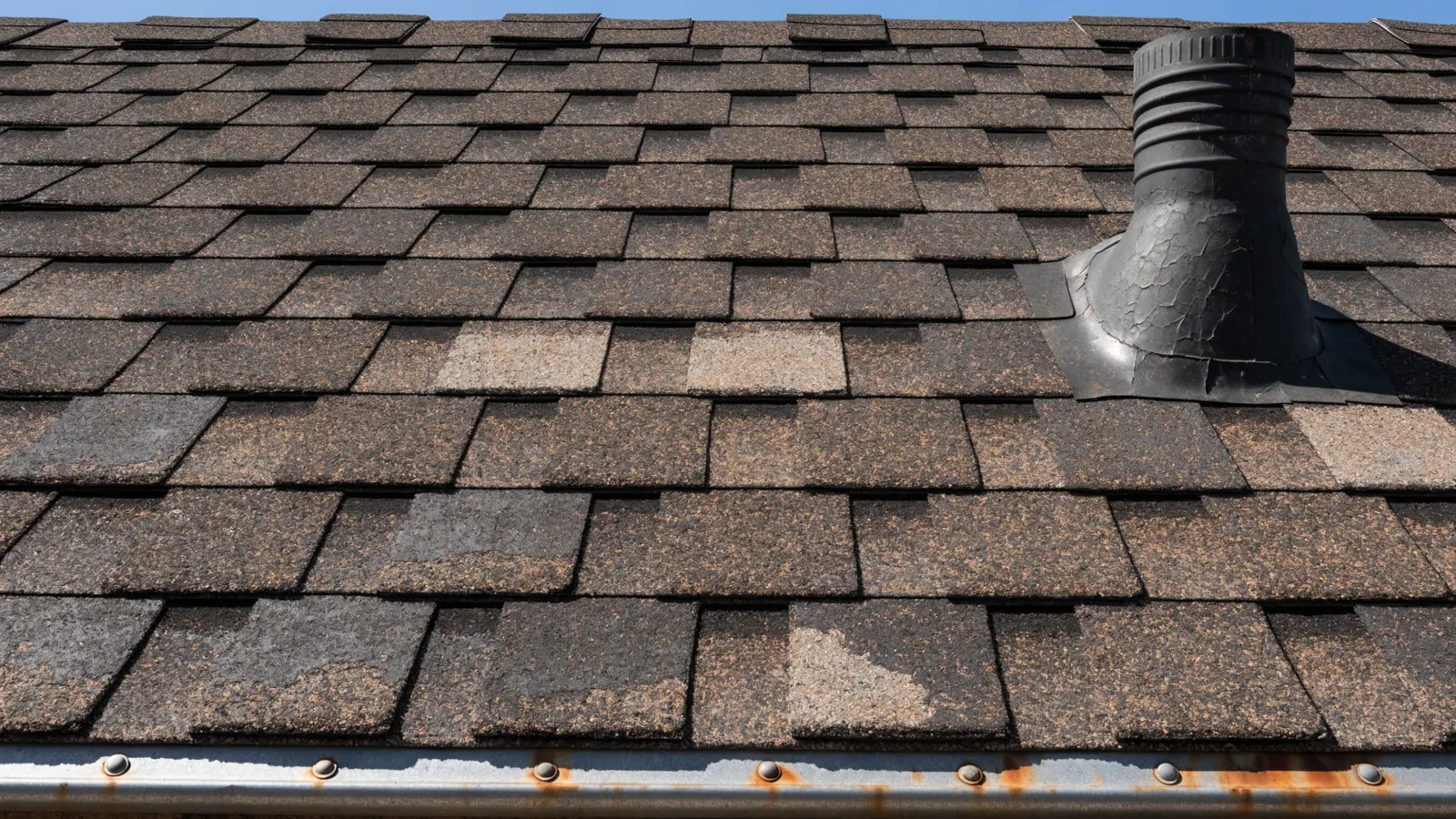
What the Roof Inspection Covers
Covering type and approximate age, fastener condition, flashing at every penetration and wall intersection, valley metal, drip edge attachment, eave and rake condition, gutters and their terminations, and then the attic side: decking, framing, prior repairs, ventilation and any staining that indicates water has been in where it should not be.
The attic half is the half people skip. A roof surface can look serviceable from above while the decking underneath tells a completely different story, and you only find that out by going in and looking at the underside with a flashlight.
How We Get on the Roof
We walk it when the pitch and the covering allow it safely. When they do not, we work from a ladder at the eaves with a pole camera and binoculars, and the report states which method was used on which slope. That distinction matters and most reports bury it. "Roof inspected" could mean an inspector stood in the driveway, and you should never have to guess.
What Fails First on the Barrier Island
Fasteners. Exposed nail and screw heads on ridge caps, vents, flashings and drip edge sit in salt-laden air continuously, and they corrode from the head down. A fastener that has lost its head is no longer holding anything, which is how a section of drip edge or a vent boot lifts in a storm that the rest of the roof shrugs off.
After fasteners: vent boot seals, which are rubber and go brittle. Valley metal, which corrodes where debris holds moisture against it. Sealant at wall flashings, which is a maintenance item pretending to be a permanent one. And the drip edge along the eave on the exposed elevation, where wind-driven rain finds any gap.
The pattern we see most often in 32937: a roof with plenty of covering life left, failing at the edges and penetrations on the ocean-facing slope while the river-facing slope of the same roof looks nearly new. Same roof, same age, same installer. Different exposure.
The Roof and Your Insurance
In a wind-borne debris region the roof is most of what a carrier prices against, and the OIR-B1-1802 wind mitigation form is where that gets recorded.
What the 1802 Form Actually Asks
Roof covering and whether it meets the applicable product approval. Roof deck attachment, meaning nail type and spacing, which usually requires a look in the attic. Roof-to-wall connection, whether toe nail, clip, single wrap or double wrap. Roof geometry, where a hip roof earns more than a gable. Secondary water resistance, present or absent. And opening protection, which is windows and doors rather than the roof but sits on the same form and carries real weight.
Every full home inspection we run in Satellite Beach includes the wind mitigation report free, a $125 value. A sound roof with no documentation earns you nothing, which is a strange way to lose money.
Reading the Recommendations
Our roof findings say what the condition is, what it means, and what class of response it calls for: monitor, maintain, repair, or replace. They do not say which contractor to call or what it should cost, because we are not in that business and any number we gave you would be a guess dressed as expertise.
If the report says a section needs a roofer's eye, get two quotes rather than one.
After a Storm
Brevard gets brushed more often than it gets hit, and either way the barrier island takes it first. What matters afterwards is documentation.
Get It Documented Before You File
An independent inspection with dated photographs is a record of the roof's condition made by someone with no stake in the claim. That is a materially different document from an assessment by a company hoping to replace the roof, and it is worth having in hand before the adjuster arrives rather than after.
What Storm Damage Looks Like Here
Lifted or missing shingles on the windward slope. Displaced ridge caps. Bent or detached drip edge. Torn vent boots. Debris impact marks. Granule loss concentrated in one area rather than spread evenly, which separates storm damage from ordinary ageing. And inside the attic, fresh staining on decking that was dry the last time anyone looked.
Book a Roof Inspection
Standalone roof inspections start at $100 in Satellite Beach with no travel fee. If you are buying, the roof is already inside the full inspection, covered on our pre-purchase page, along with everything else on the checklist. Get a number from the rates page, read more about our roof inspection services across Brevard, or go back to the Satellite Beach home inspector page.