
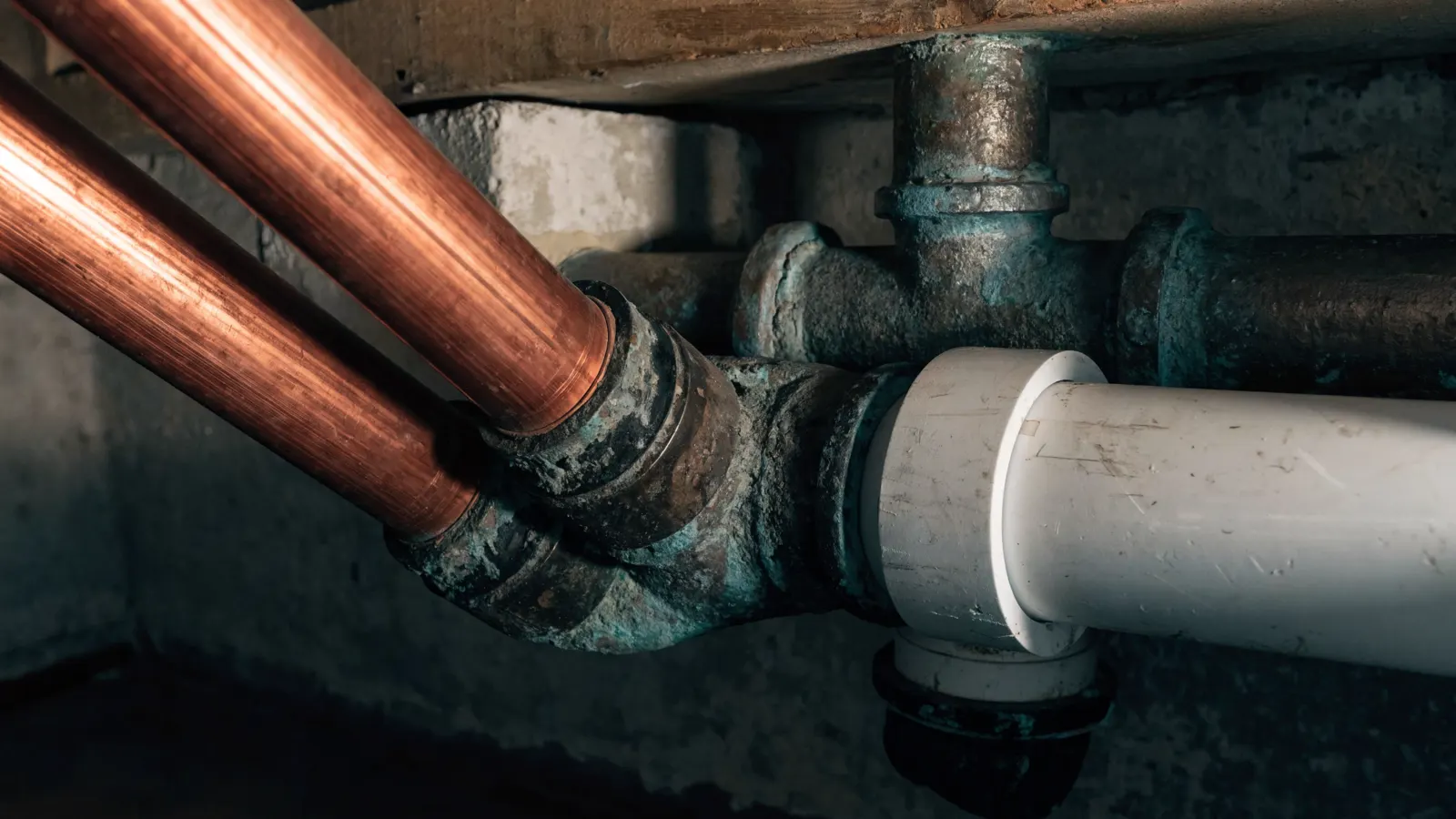
Cast Iron Is the Headline
Satellite Beach did most of its building between 1960 and 1980, and through that period cast iron was the standard material for drain, waste and vent piping. It is durable stuff. It also corrodes from the inside out, scale narrows the bore, the wall thins, and eventually a section cracks or a joint separates. Sixty years is roughly where that story ends.
Under a slab, replacing it means cutting the floor, which is why the number is five figures and why it arrives as a shock rather than a plan.
What a visual inspection can and cannot tell you: we can identify the material, examine every accessible point, test drainage at every fixture, and read the symptoms. We cannot see inside a pipe buried in concrete. When the age and the symptoms line up, the report says a camera scope is warranted and explains why, so you can order one while you still have an inspection period to order it in.
The Symptoms That Add Up
Slow drainage at more than one fixture, particularly the ones furthest from the main. Gurgling from a tub when a toilet flushes, which points at venting or partial blockage. A history of backups the seller mentions casually. Staining or efflorescence at the slab edge. Floor tile that has lifted in a line rather than a patch. None of those is conclusive alone. Together they are a camera scope.
What a Scope Actually Shows
A plumber runs a camera through the line and records it. You see scale build-up and how far it has narrowed the pipe, cracking, joint offsets where sections have shifted, root intrusion, and bellies where the line has sagged and holds standing water. That recording is the difference between "the house is 58 years old so the drains might be bad" and a specific, priceable condition.
Supply Piping and Water Quality
Drains get the attention. Supply lines cause the day-to-day complaints.
Galvanized Steel
Galvanized supply piping corrodes internally, and the corrosion narrows the bore rather than leaking at first. The symptom is pressure: fine at the fixture nearest the meter, poor at the one furthest away, and worse when two fixtures run at once. Discolored water after the house has sat empty for a week is the other tell, which comes up often on beachside properties used seasonally.
We run every fixture and test functional flow with more than one open, because a single tap at a time hides the problem.
What Else We Find in the Walls
Mixed materials from decades of partial repairs, which is normal and only a problem where dissimilar metals meet without a dielectric union. Supply lines run through a slab. Angle stops seized open. Missing or improperly configured shut-offs. Hose bibs without backflow protection, which on a house with irrigation matters more than it sounds.
Water Heaters in a Beachside Garage
Ten to twelve years is where most tank heaters end, and a garage in Satellite Beach is a corrosive place to spend them. We report the manufacture date read from the serial rather than estimated, the capacity against the size of the house, the temperature and pressure relief valve and where it discharges, the drain pan and whether it terminates anywhere useful, and corrosion at the fittings and the tank base.
A heater with no pan, sitting on a garage slab against a drywall wall shared with a bedroom, is a finding at any age. When it fails it will not announce it.
Slab Leaks
A supply line running through a slab that develops a pinhole leak will keep leaking, under the floor, until something upstairs makes it obvious. Warm spots on a tile floor. A water bill that climbed without explanation. Moisture readings in a wall base that make no sense for that room. Cabinet kick plates swelling from below.
We carry thermal imaging on every inspection and confirm anything it suggests with a moisture meter, because a thermal image on its own shows temperature difference rather than water and reporting it as a leak would be a guess. Confirming and locating an actual slab leak takes pressure testing and acoustic equipment, and the report tells you when it is time for that.
Where Plumbing Sits in the Inspection
Plumbing is one of the four systems in a 4-point inspection, which is $150 and usually what an insurance carrier wants on a home 30 years or older. It is covered in full inside a complete home inspection, along with everything else on the Satellite Beach checklist. If you are buying, the timing advice on our pre-purchase page matters here more than anywhere: a camera scope has to be arranged, performed and quoted inside the inspection period, and that cannot be done in the last two days of it.
Get a price from the rates page, or return to the Satellite Beach home inspection page.