
First, What Is Not Involved
People arrive at this page looking for two different things, and it is worth separating them before anything else.
A home inspection is a private, non-invasive visual assessment. You hire an inspector, they attend, they write a report, you use it to make a decision. No permit. No application. No city involvement of any kind. That is what this page describes and what SureHome does.
A building inspection is the municipal check that follows permitted construction work. It is scheduled by whoever holds the permit, it is performed by the city, and it exists to confirm the work meets code. If that is what you were searching for, the city's building department handles it. We neither perform it nor coordinate it, and any page telling you how to apply for a permit to have your house inspected has confused the two.
The practical version: if you are buying, selling or insuring a property, you want a home inspection and there is nothing to apply for. If you are building, renovating or replacing a roof, your contractor deals with permits and the city inspects the work. The two never overlap.
Booking
Three things settle a booking, and two of them are yours.
Get a price, then call
The instant quote tool returns a real figure from square footage and inspection type. Then call or text 321-722-7321 with the address, any contract deadline you are working to, and a contact for whoever controls access. Full pricing on the cost page.
Sort out access
On the island this is usually the constraint rather than our calendar. A vacant listing needs a lockbox code. An occupied home needs the owner. A vacation rental with guests in it needs a day's notice, and a condominium may need the association told before anyone carries a ladder through a common area.
Confirm the utilities are on
Power, water and gas. Without them the electrical, plumbing and HVAC portions cannot be performed, which means a partial inspection and a second visit. On a seasonally used Cocoa Beach property, check rather than assume. This is the most common cause of a wasted trip. See how to prepare.
The Day Itself
The order is not arbitrary. The exterior tells you the construction and the exposure, the roof tells you the maintenance history, and by the time the panel cover comes off you already know what era of work to expect behind it.
How the Visit Runs
Exterior first: walls, grading, drainage, soffit and fascia, garage door, exterior fixtures. Then roof and attic, walked where the pitch and covering allow and recorded per slope when they do not. Then the interior room by room, running every fixture and testing a representative sample of devices along with all accessible GFCI protection. Then the mechanical systems, the condenser and air handler and water heater. Then the electrical panel with the dead front removed.
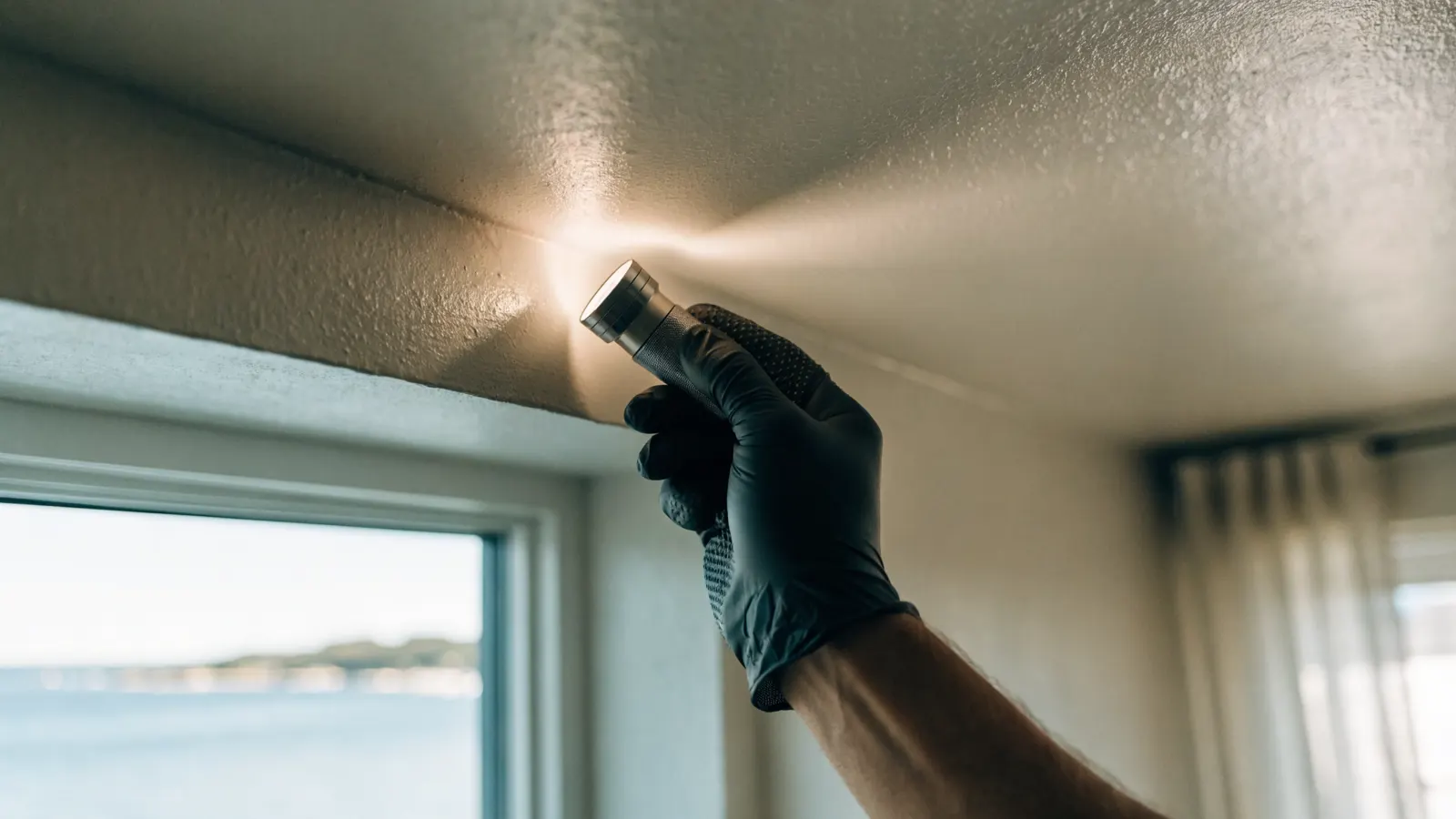
Thermal imaging runs throughout, and nothing is called a moisture problem on a thermal image alone. A moisture meter confirms it or the finding does not go in.
If You Attend
Come for the last hour. That is the walkthrough, where the significant findings get pointed at rather than described. You are welcome for the whole thing, but most of it is quiet methodical work and on an occupied property fewer people in the house makes it go faster.
The Report
Within 24 hours of the inspection, usually the same evening.
How It Is Organized
Findings are grouped by consequence rather than by room. Everything that affects insurability sits together, everything that is a safety issue sits together, and routine maintenance sits together, so you are not hunting through forty pages to work out which of the findings actually decides anything. Every one is photographed and captioned with what it is and where it was.
How to Work Through It
Three passes. Insurability first, because a buyer who cannot bind a policy cannot close. Safety second. Cost third, in descending order. Everything below that is a maintenance list for the years you own the property, and putting all of it into a repair request is the most reliable way to get none of it.
Where a finding needs a specialist, the report names the trade and the question to ask. On an older island property that is most often an electrician for an obsolete panel or a plumber with a camera for original cast iron drains. Order those inside your inspection period, not after it.
After the Report
If you are buying, the inspection period is the window in which the report is worth something: you can request repairs, ask for a credit, or cancel, depending on how your contract is written. If you are selling, you decide what to fix, what to price in and what to disclose, on your own timeline. If you are insuring, the wind mitigation report included with every full inspection is what your carrier wants to see.
Call 321-722-7321, get a figure from the rates page, or read what the inspection covers on the checklist page. Back to the main page for home inspection in Cocoa Beach.